Room to move
Choose the largest safe enclosure your home can support, with room to spread and flap the wings. Provide varied, bird-safe perches and supervised time outside the enclosure in a secured space.
The golden conure is a social parrot native to the Brazilian Amazon. Read about its natural history, the work involved in companion care, and efforts to protect its forest habitat.
The golden conure lives in the forests of the eastern Amazon, where it feeds and roosts with other birds.
“Golden conures live in social groups and depend on the forests of northern Brazil.”
Known as the golden parakeet as well as the golden conure, Guaruba guarouba is native to northern Brazil. Adults are mostly vivid yellow, with green flight feathers and a dark, curved beak. Young birds develop their adult coloring as they mature.
Golden conures are social. In the wild, groups forage and roost together, and breeding can involve more than one adult helping to care for young. That social nature is part of their appeal. It also means a pet parrot needs daily interaction, room to move, and activities that engage its mind.
The species’ forest home has faced pressure from habitat loss and capture. Any guide to golden conures should start with the needs of wild populations, as well as the considerable responsibility involved in keeping a parrot.
Golden conures spend their wild lives in the forests of northern Brazil. These images show the bird in the canopy and the company it keeps.
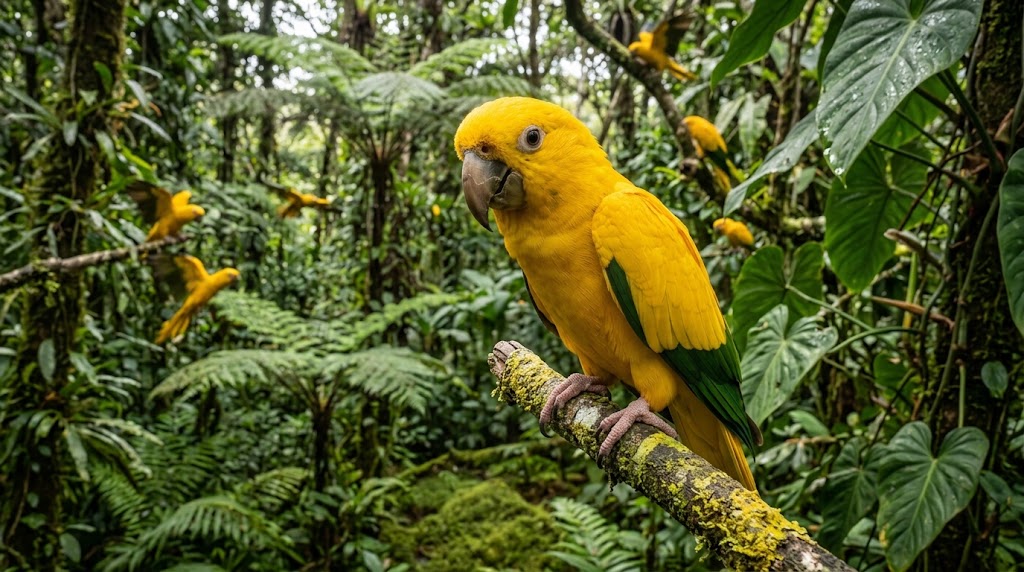
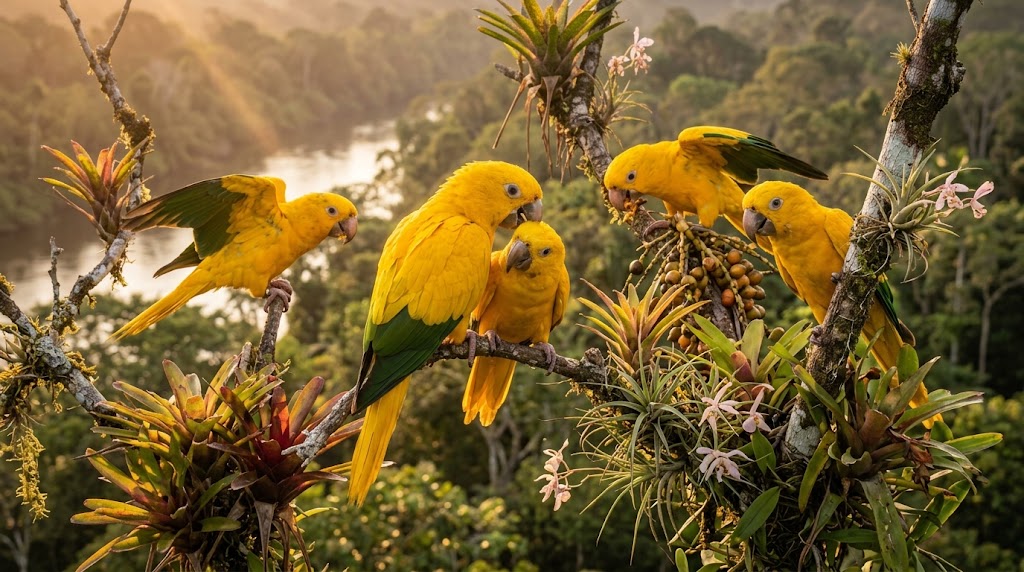
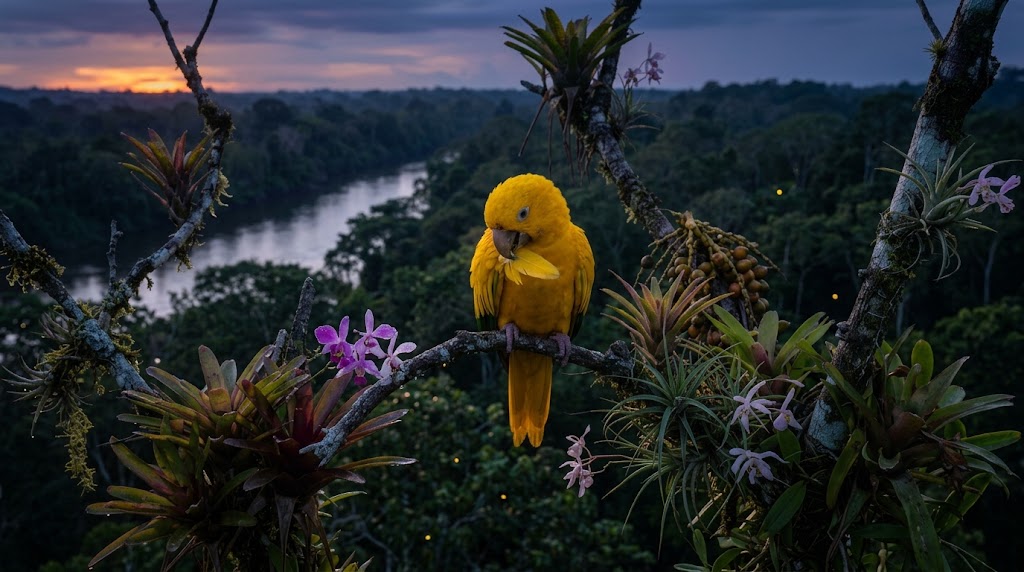
Golden conures are intelligent, active parrots. They need daily care, a safe environment, and veterinary attention from an avian specialist.
Choose the largest safe enclosure your home can support, with room to spread and flap the wings. Provide varied, bird-safe perches and supervised time outside the enclosure in a secured space.
Wild golden conures eat a varied diet. For a companion bird, ask an avian veterinarian to shape a balanced plan; a seed-only diet is not a sound default. Make diet changes gradually with professional guidance.
Offer safe shredding and foraging activities, rotate toys, and build in calm, positive training. Daily social contact matters; a bird should not be expected to entertain itself all day.
Keep birds away from smoke, fumes, aerosols, overheated nonstick cookware, open windows, ceiling fans, and toxic foods. Ask an avian vet for a room-by-room safety review.
Find an avian veterinarian before bringing a bird home. Schedule routine checkups and learn the signs of illness; birds can hide symptoms, so sudden changes in eating, droppings, breathing, or activity need prompt advice.
Parrots need consistent care over many years. Consider time, housing, veterinary costs, travel plans, and a backup caregiver before making a commitment.
Care note: This overview is educational, not a veterinary care plan. Golden conure needs vary by individual. Work with an avian veterinarian for diet, housing, health, and behavior decisions.
Golden conures depend on Amazonian forest. Habitat loss and trapping have affected the species. Conservation efforts include protecting habitat, researching the birds, and discouraging illegal capture.
Conservation assessments can change as new research becomes available. Check current conservation sources for the latest status in your region.
Learn more: Minnesota Zoo · World Parrot Trust
Answers to common questions about the species and its care.
The golden conure (Guaruba guarouba), also called the golden parakeet, is a parrot native to the Amazon region of Brazil. Adults are mostly bright yellow with green flight feathers.
They are not an easy or low-maintenance pet. Their social, space, enrichment, and veterinary needs are substantial. Talk with an avian veterinarian and experienced parrot carers before making a commitment.
Wild golden conures eat a varied diet that includes fruit, seeds, buds, and flowers. A companion bird’s diet should be planned with an avian veterinarian and generally use a balanced formulated base with appropriate fresh foods, rather than a seed-only mix.
Golden conures are considered at risk in the wild, with habitat loss and trapping among the pressures on the species. Status labels can differ by authority and change over time, so consult current conservation and wildlife-agency sources.
Ask about the bird’s legal status and captive-bred documentation, arrange access to an avian veterinarian, and plan for housing, enrichment, daily social time, ongoing costs, and backup care. Check local laws before making any decision.